A research group led by Associate Professor Rufan Zhang in the Department of Chemical Engineering at Tsinghua University has recently made significant progress in the development of multifunctional radiative cooling fabrics. The team designed and fabricated a bacterial cellulose aerogel fiber fabric with a radial gradient porous structure, successfully overcoming the long-standing trade-off between mechanical strength and cooling performance in aerogel fibers. The fabric also integrates radiative cooling, mechanical protection, and motion monitoring. This work presents a versatile, sustainable, and scalable strategy for preparing radiative cooling aerogel fibers and multifunctional textiles for outdoor personal thermal management.
Radiative cooling is a passive cooling technology that lowers temperature by emitting thermal radiation. It can achieve sub-ambient cooling under direct sunlight without any energy input. This technology could offer a potential alternative to energy-intensive cooling equipment such as air conditioners and help alleviate the global energy crisis. Radiative cooling fabrics enable zero-energy cooling by reflecting solar radiation and dissipating body heat into outer space through the atmospheric transparency window, making them highly promising for personal thermal management. However, conventional fabrics struggle to meet multiple requirements simultaneously, including high-efficiency cooling, adequate mechanical strength, and sensing functionality. Aerogel fibers have attracted considerable attention for their high porosity and excellent radiative cooling capability. However, their porous structure often leads to insufficient mechanical strength, limiting their practical application in wearables. As a sustainable, bio-based material, bacterial cellulose exhibits high crystallinity, low thermal conductivity, and abundant surface functional groups. However, its moderate refractive index limits its light-scattering efficiency, making it difficult to achieve high solar reflectivity directly.
To address these challenges, the research team developed a wet-spinning strategy based on a gradient coagulation bath. By regulating the phase-separation rate of the fibers in coagulation baths of varying concentrations, the team induced the spontaneous formation, within a single fiber, of a radial gradient structure comprising a dense, wrinkled shell and a porous core. The high-concentration coagulation bath promotes rapid phase separation at the fiber surface, forming a dense, wrinkled shell. In contrast, the low-concentration bath induces slower phase separation within the fiber, generating an ordered porous core. The synergistic effects of multi-scale light scattering significantly enhance the solar reflectivity of the gradient porous bacterial cellulose aerogel fiber (GP-BCAF) fabric. Meanwhile, the micron-scale wrinkles in the shell dissipate impact energy through elastic deformation, while the nanofiber network in the core provides stable mechanical support.
Based on this method, the researchers employed a gradient coagulation bath wet-spinning strategy, passing the bacterial cellulose solution sequentially through high- and low-concentration coagulation baths. This process produced a radial gradient structure within a single fiber, consisting of a dense, wrinkled shell and a porous core (Figure 1a-d). The figure also presents photographs of the fabric, the solar reflectivity and infrared emissivity spectra, and a radar chart comparing the performance of cotton, wool, and dense smooth-shell aerogel fiber (DS-BCAF) fabrics (Figure 1e-f). The results indicate that the GP-BCAF fabric achieves a solar reflectivity of 94.7% and a mid-infrared emissivity of 97.3%.
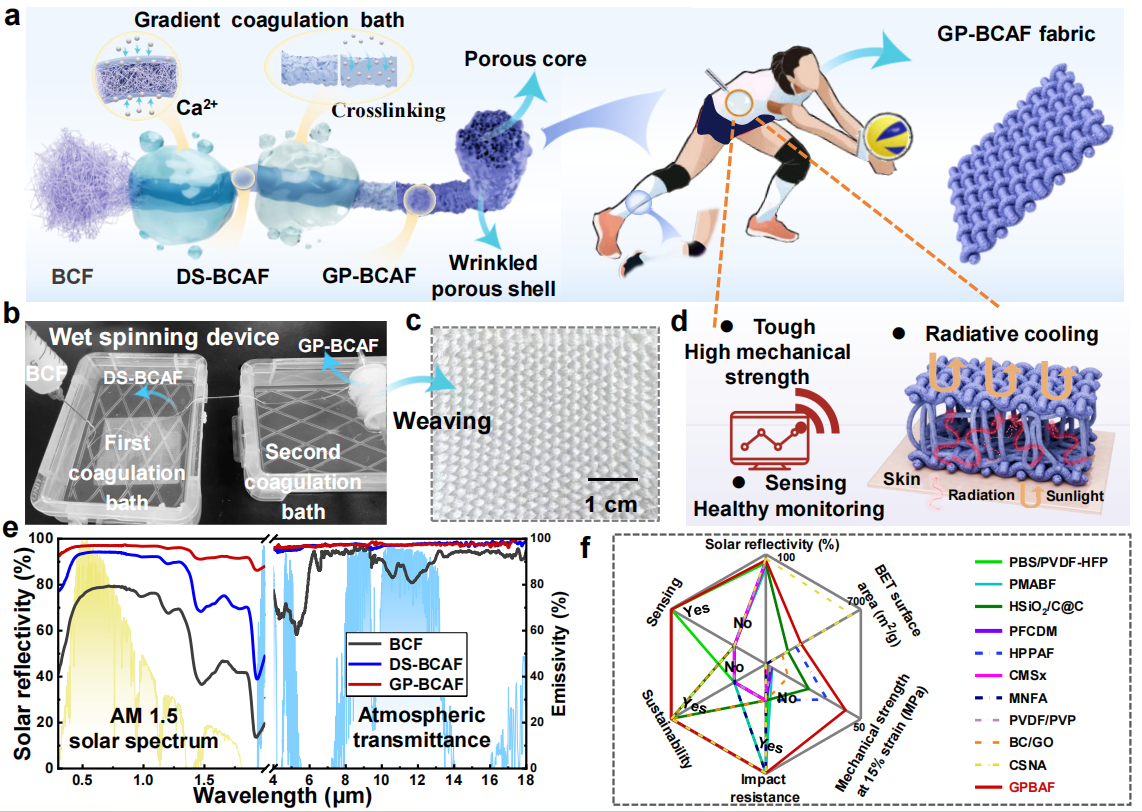
Figure 1. Fabrication and characterization of the GP-BCAF fabric
FTIR and XPS results confirm the successful introduction of Si-O-Si and Si-C bonds onto the fiber surface after silanization, with the modification extending throughout the entire fiber cross-section (Figure 2a-c). The SEM images show that DS-BCAF fibers have a smooth shell structure, whereas GP-BCAF fibers exhibit a distinctly wrinkled shell and a porous core (Figure 2d-g). The XRD patterns indicate moderate changes in the crystalline structure of GP-BCAF (Figure 2h). The BET measurements further reveal that GP-BCAF has a higher specific surface area and a larger pore volume than DS-BCAF, with a pore-size distribution spanning micropores, mesopores, and macropores (Figure 2i-j).
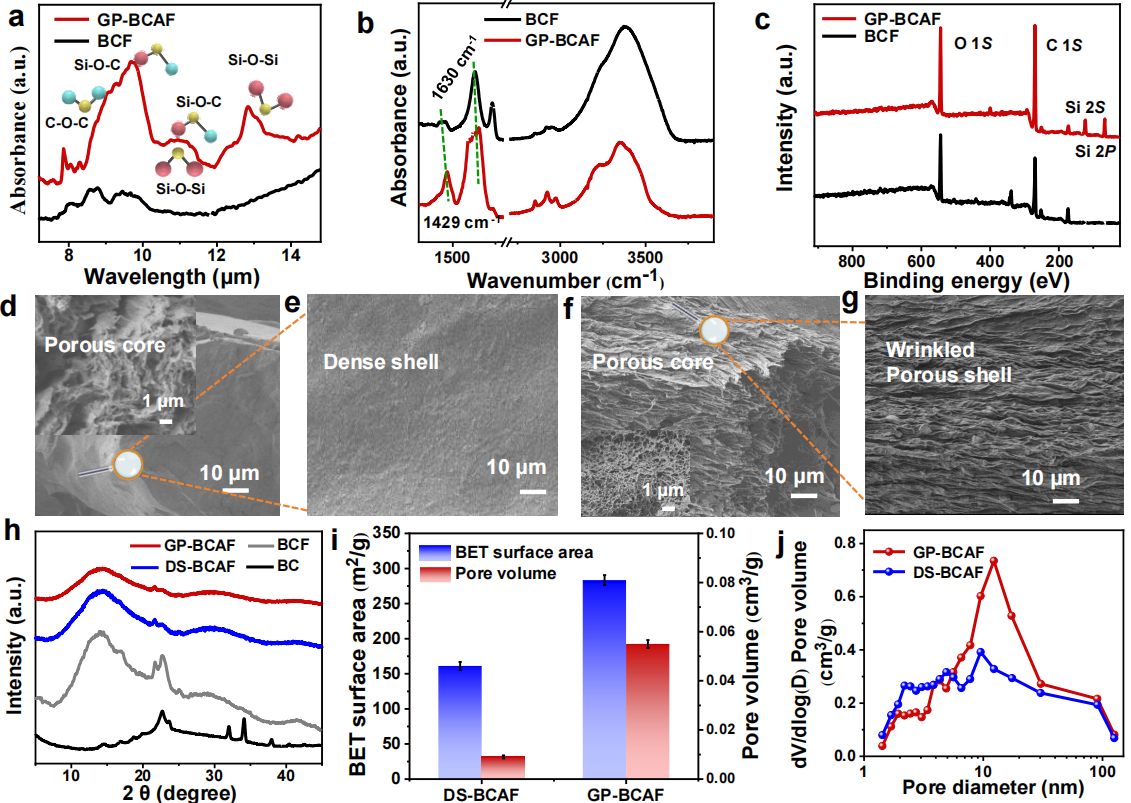
Figure 2. Chemical and structural characterization of GP-BCAF fibers
Measurements of air permeability and water vapor transmission rate show that the comfort of the GP-BCAF fabric is comparable to that of cotton fabric (Figure 3a-c). In an outdoor test conducted in Beijing on September 7, 2025, the GP-BCAF fabric reached an equilibrium temperature under sunlight that was 8.5 °C lower than that of cotton fabric, 6.2 °C lower than that of wool fabric, and 1.8 °C lower than that of DS-BCAF fabric (Figure 3d-g). A human forearm test further showed that the skin temperature under the GP-BCAF fabric was 7.4 °C lower than that of bare skin, 2.8 °C lower than that under cotton fabric, and 1.4 °C lower than that under DS-BCAF fabric (Figure 3h-j).
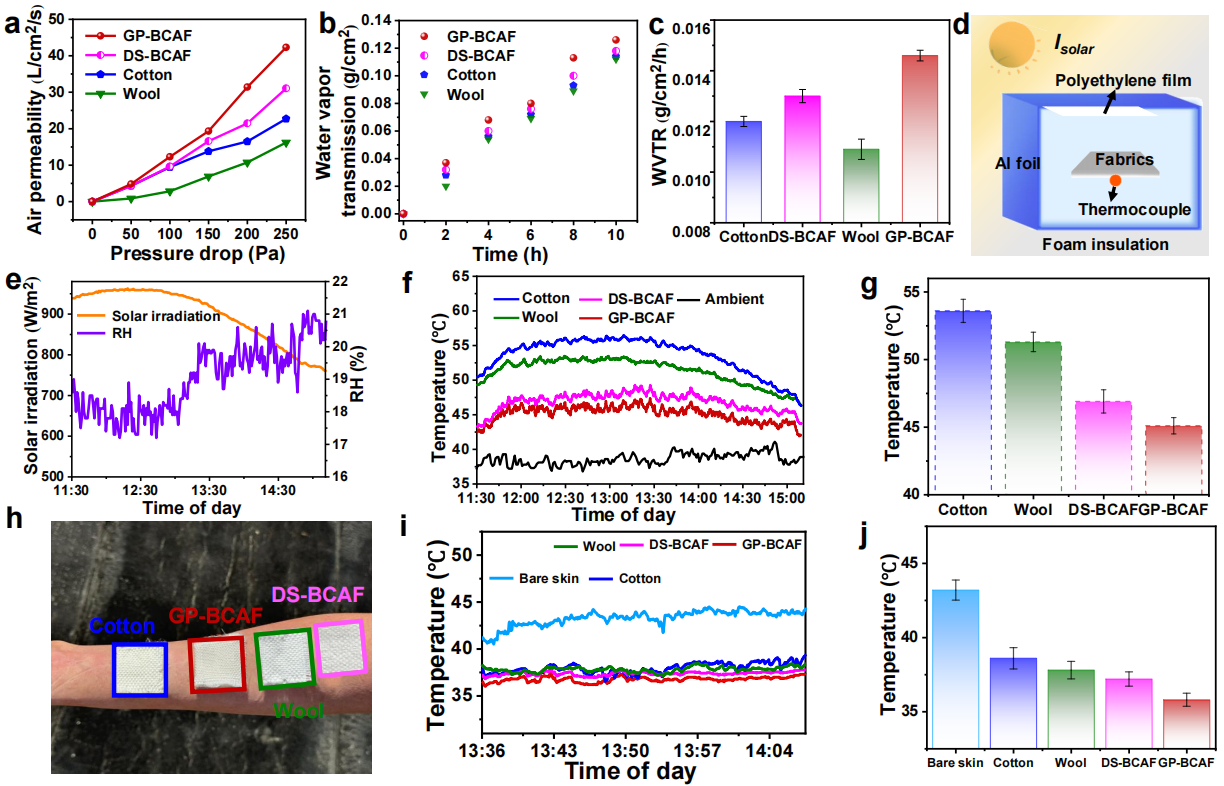
Figure 3. Comfort and outdoor cooling performance of the GP-BCAF fabric
Stress-strain curves indicate that GP-BCAF fibers have a tensile strength of 50 MPa and an elongation at break of 23%, both significantly higher than those of DS-BCAF fibers (Figure 4a-b). A single GP-BCAF fiber can withstand a tensile load of 100 g without breaking (Figure 4c). Simulation results show that the gradient porous structure can effectively distribute stress and mitigate stress concentrations (Figure 4d-e). In the drop-weight impact test, the peak impact force of the GP-BCAF fabric was 42.8% lower than that of the DS-BCAF fabric, and the buffering time was longer, indicating improved dynamic protective performance (Figure 4f-h).
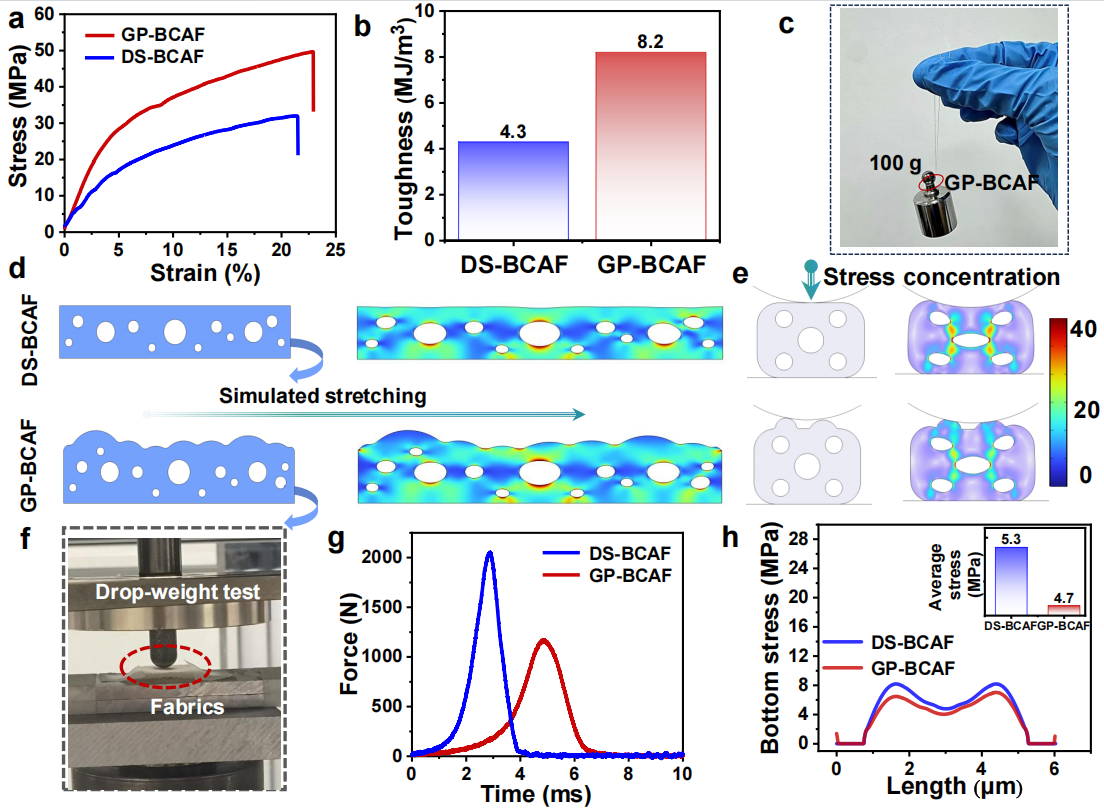
Figure 4. Mechanical properties and impact resistance of the GP-BCAF fabric
The fabric can be manufactured on a large scale using continuous spinning and weaving, and it offers good softness and flexibility (Figure 5a-e). When integrated into a triboelectric nanogenerator, it enables real-time monitoring of voltage signals across various states, including motion, rest, impact, and continued motion after impact. These signals can be clearly distinguished even under sweating conditions (Figure 5f-i). Impact-comparison photographs show that the GP-BCAF fabric can effectively protect wood boards from impact damage. Infrared thermography further confirms that when the GP-BCAF fabric is worn outdoors under sunlight, the skin surface temperature is significantly lower than that of control fabrics.
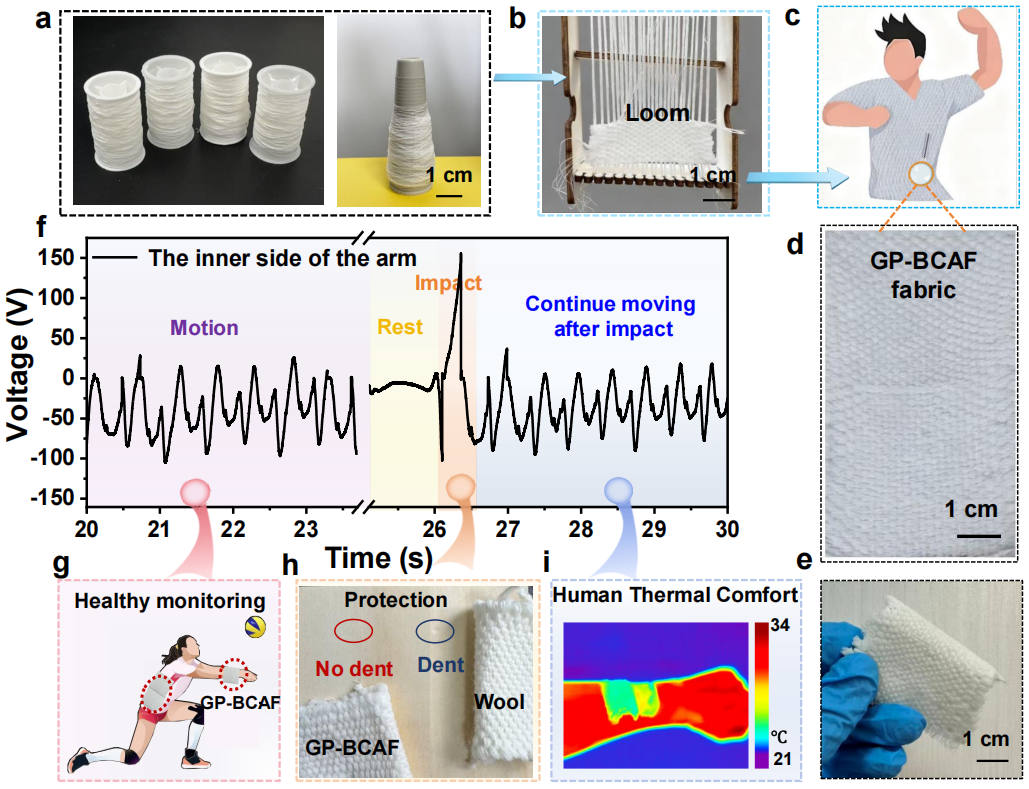
Figure 5. Multifunctional applications and performance of the GP-BCAF fabric
The research was published in Nature Communications under the title “Multifunctional Aerogel Fiber Radiative Cooling Fabric for Outdoor Personal Thermal Management.”
Rufan Zhang is the corresponding author of this research. Linan Feng, a postdoctoral fellow in the Department of Chemical Engineering at Tsinghua University, is the first author. The study also involved Kangkang Wang, Aike Xi, Zhenyu Guo, Weiyin Su, Siming Zhao, Ya Huang, and Zhuojing Zhao from the Department of Chemical Engineering at Tsinghua University. This work was supported by the National Natural Science Foundation of China, the National Key Research and Development Program of China, the CNPC Innovation Fund, and the Beijing Natural Science Foundation.
Link:https://www.nature.com/articles/s41467-026-77997-w