People
People

People


-

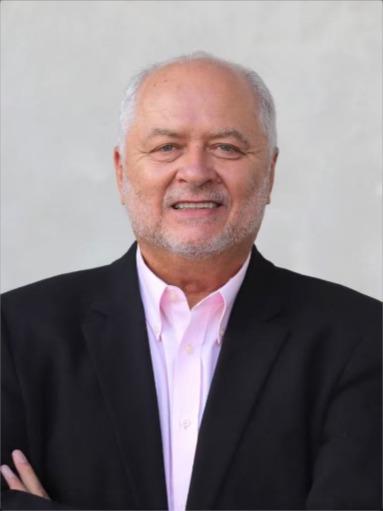
Romildo Dias Toledo Filho
Professor Romildo Dias Toledo Filho is a tenured professor at the Federal University of Rio de Janeiro (UFRJ) and Executive Director of the UFRJ Science and Technology Park. He served as Vice Director from 2015 to 2019 and as Director from 2019 to 2023 of COPPE/UFRJ, the largest and highest ranked graduate school and research institute in engineering in Latin America. He is an elected Member of...
-
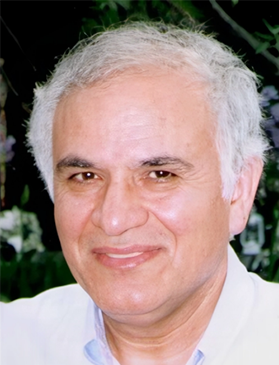
Abbas Firoozabadi
Foreign Member of the Chinese Academy of Engineering, Member of the U.S. National Academy of Engineering (NAE)
Professor Abbas Firoozabadi is a Foreign Member of the Chinese Academy of Engineering, a Member of the U.S. National Academy of Engineering (NAE), a Research Professor in the Department of Chemical and Biomolecular Engineering at Rice University, and the Director of the Reservoir Engineering Research Institute (RERI) in Palo Alto, California. His research focuses on the efficient development of subsurface conventional/unconventional oil and gas reservoirs and related environmental management. His work encompasses advanced numerical modeling of subsurface flow, bulk thermodynamics, interfacial thermodynamics, and irreversible thermodynamics. By developing continuum-scale and molecular simulation methods, he explores novel and improved technologies for hydrocarbon recovery and shale reservoir development. His current research priorities include molecular engineering using trace functional molecules to enhance the efficiency of oil and gas energy production and enable environmental remediation. Recently, his research scope has extended to fracturing technologies. He has authored or co-authored approximately 270 papers in international journals and written two books on the thermodynamics of hydrocarbon energy production, published by McGraw-Hill. He has received four major awards from the Society of Petroleum Engineers (SPE), including the Anthony F. Lucas Gold Medal, in recognition of his outstanding achievements in improving petroleum exploration and production technology and practice through his work on hydrocarbon reservoir and production thermodynamics, multiphase flow in fractured porous media, and hydrocarbon reservoir performance.
-
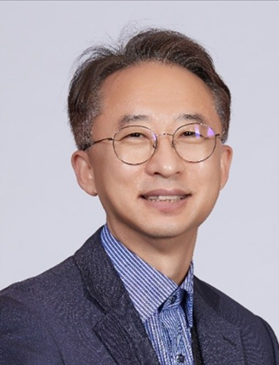
Sang Young Lee
Professor, Yonsei University
As a leading figure in both the battery industry and academic research in Korea, he is also an internationally renowned scholar in the field of lithium battery research. His work primarily focuses on high-loading electrodes, solid-state batteries, advanced electrolytes, and wearable batteries. He has designed various electrode binders, developed dry electrode technology along with multiple low-temperature and fast-charging electrolytes. Related achievements have been implemented in companies such as LG Chem, contributing to the advancement of Korea’s battery industry. Professor Sang Young Lee served as Chief Scientist at LG Chem in Korea for over a decade (1997–2008), playing a significant role in the early commercialization of lithium-ion batteries in the country. Additionally, he has mentored dozens of professionals working in the battery field.With 248 papers published in top-tier journals including Nature Energy, Nature Communications, Energy & Environmental Science, Journal of the American Chemical Society, and Angewandte Chemie, his work has been cited 17650 times and he holds an h-index of 72.He currently serves as a director of the Yonsei battery research center, a head of the battery engineering department.
-
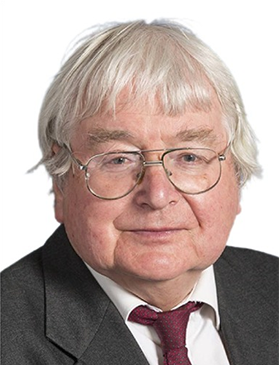
Charles Richard Arthur
Professor, Department of Chemistry, University College London
Professor Richard Catlow has long been engaged in computational and experimental studies of complex inorganic materials. By integrating advanced computational methods with experiments, he has made significant contributions to fields such as catalysis and mineralogy. In 2004, he was elected a Fellow of the Royal Society (FRS) for his pioneering role in advancing the development and application of computer modelling in solid-state and materials chemistry.His research covers oxides, sulfides, silicates, and molecular materials, with applications in energy and catalysis. Specific areas include simulating the structure and energetics of disordered materials, particularly those used in energy storage devices and transparent conductive oxides; modeling and predicting the structures of crystals, surfaces, and nanoparticles; combining computational modelling with synchrotron radiation and neutron scattering spectroscopy to gain deep insights into the structure and mechanisms of catalytic processes, especially in oxide and microporous catalytic systems; and simulating the properties of photoactive oxides.Professor Catlow has led his team in developing a range of important advanced research tools, platforms, and applications. These include deriving interatomic potential models for inorganic materials and quantum mechanical/molecular mechanical (QM/MM) techniques for accurately predicting local properties in solids; software for high-performance computing platforms; and in situ synchrotron and neutron scattering techniques for studying catalytic mechanisms. Among these, computational simulation technologies for materials have been widely adopted in the chemical industry.