Recently, a research group led by Prof. Hu Shanying from the Department of Chemical Engineering at Tsinghua University has made new progress in the study of China’s process-related carbon emissions and associated utilizable exhaust gases. From the perspective of synergistic utilization of exhaust gases in the context of carbon neutrality, the study systematically quantifies the scale and driving factors of process-related carbon emissions and associated utilizable exhaust gases at both provincial and sectoral levels in China. This work fills a critical data gap in the field and provides a scientific model and data foundation for the low-carbon transition of industry and the deployment of exhausts utilization technologies.
Process-related carbon emissions pose a key challenge to achieving carbon neutrality due to their difficulty in being abated. As the development of clean electricity continues to reduce energy-related carbon emissions, process-related emissions are becoming increasingly prominent in the mitigation strategies of China and other similarly industrialized nations. Exhausts utilization is one of the important pathways for abating process-related carbon emissions. The presence of associated components such as energy-related carbon emissions, CO, and H2 can affect the scale and process of exhausts utilization. Existing macro-level studies have predominantly focused on single component, lacking systematic quantitative analyses that integrate multiple associated components from the perspective of actual production.
The research team employed a bottom-up accounting method to construct a provincial-level emissions database for China, covering 4 components, 15 sectors, and 28 types of exhaust gases since 2000. Based on Shared Socioeconomic Pathways (SSP) scenarios and low-carbon strategy scenarios for both the production and consumption sides, the team extrapolated the emission scale to the year 2060. Concurrently, the team utilized the Logarithmic Mean Divisia Index (LMDI) model to analyze driving factors, including population (P), economic level (GDPP), production intensity (PI), and emission intensity (EI). The results indicate that the scale of China’s process-related carbon emissions and associated utilizable exhausts is substantial. In 2023, the volumes of process-related CO2 (CO2(P)), associated energy-related CO2 (CO2(AE)), associated CO, and associated H2 reached 1.82 billion, 1.25 billion, 170 million, and 30 million tons, respectively, demonstrating significant potential for utilization. Under the integrated mitigation scenario (se09), low-carbon strategies are projected to reduce CO2(P) and CO2(AE) by 82% and 94%, respectively, by 2060. Currently, carbon reduction is primarily reliant on the restructuring of industrial production, but it is expected to shift towards being technology-driven in the future.
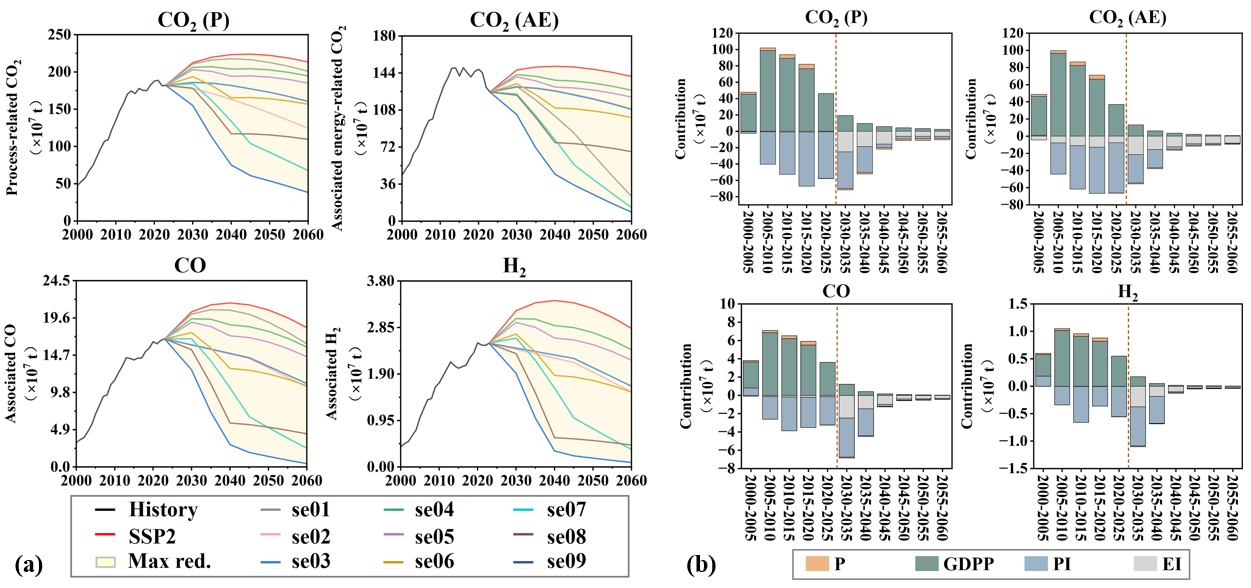
Fig.1 Scale and driving factors of China’s process-related carbon emissions and associated exhausts
Based on the constructed database, the research team further revealed the geographical migration patterns of China’s process-related carbon emissions and their associated industries. The findings show that the center for China’s process-related carbon emissions exhibits a general westward migration trend. For associated industries, the centers for resource-intensive industries shift towards central and western provinces, while those for technology-intensive and market-driven industries migrate towards eastern coastal provinces.
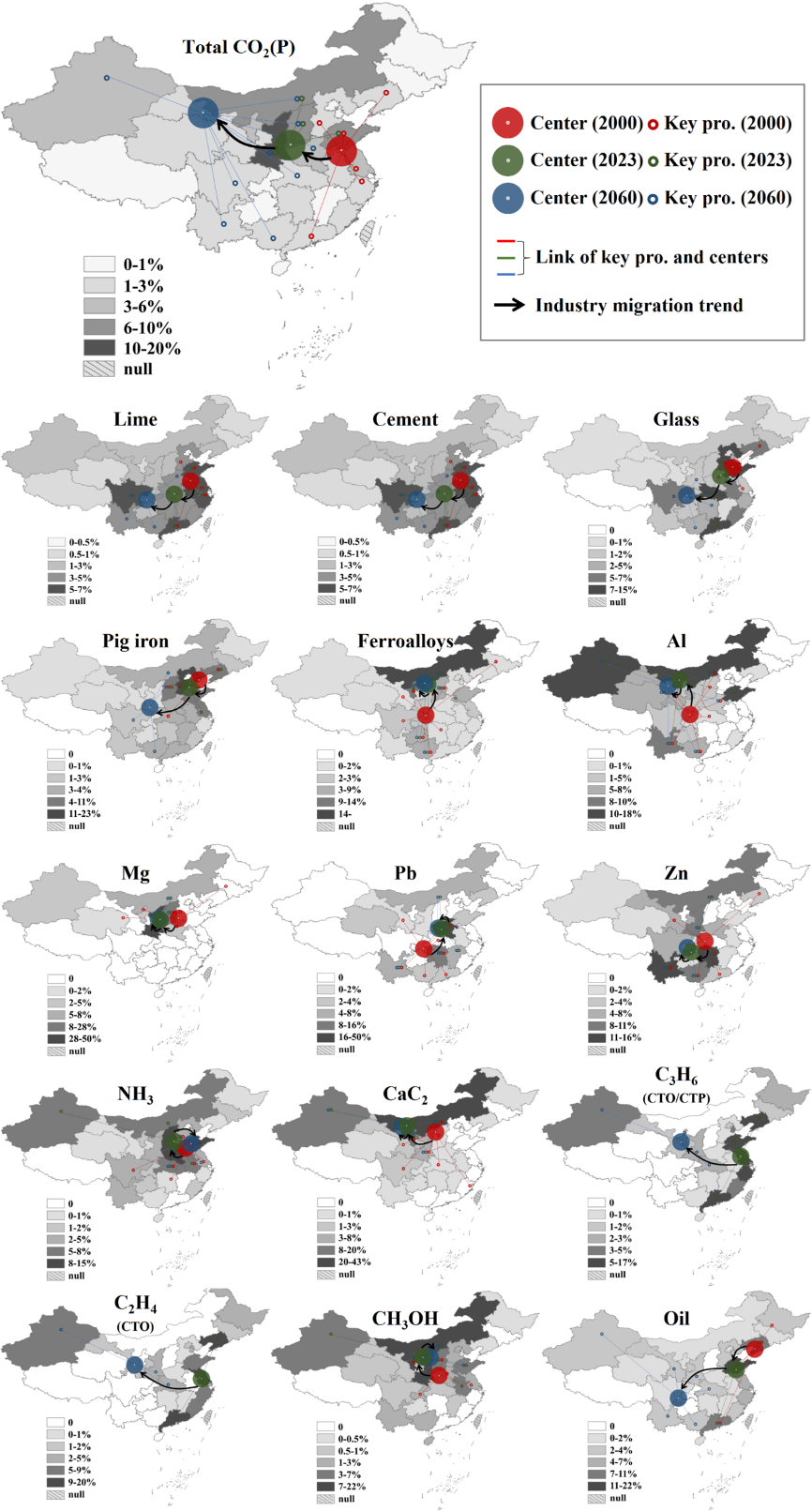
Fig. 2 Migration trends of China’s process-related carbon emissions and associated industries
This research, titled “Tracing Process-Related Carbon Emissions and Associated Utilizable Exhausts in China,” was published on Oct. 7th, 2025, in the journal Environmental Science & Technology. The first author of the paper is Zhang Zhenye, a 2021 PhD student in the Department of Chemical Engineering at Tsinghua University. The corresponding author is Prof. Hu Shanying, also from the Department of Chemical Engineering at Tsinghua University. The study was also contributed to by Prof. Jin Yong, an academician of the Chinese Academy of Engineering and a professor in the Department of Chemical Engineering at Tsinghua University, along with PhD students Zhao Kai (2022) and Xie Xin (2020).
Paper Link: https://pubs.acs.org/doi/10.1021/acs.est.5c07804